
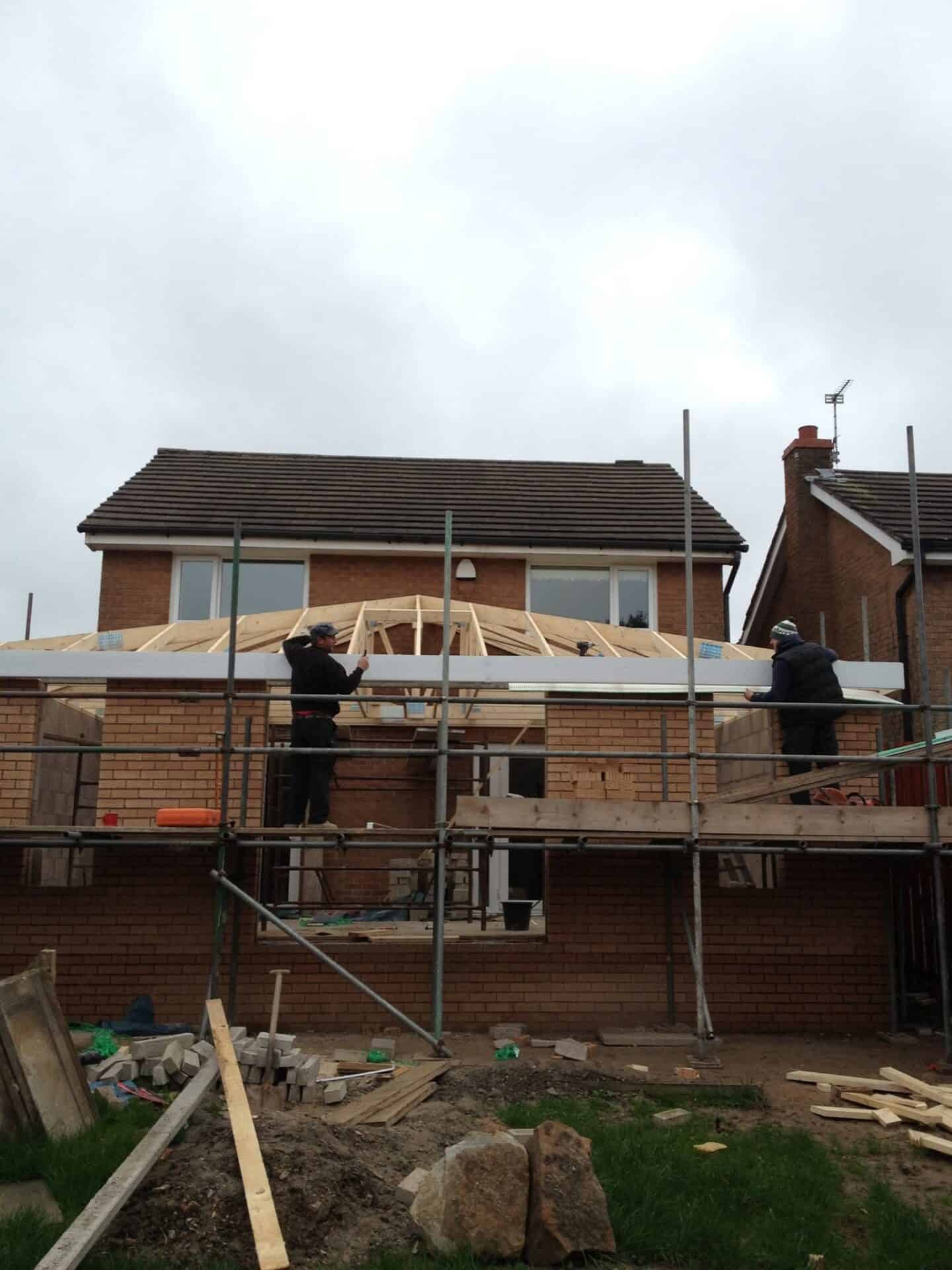
House extension costs in Glasgow can vary depending on the size, design and requirements of your project. UK-wide industry guidance suggests allowing between £1,800 and £3,000 per square metre, excluding VAT, for a finished single-storey extension. A separate industry example estimates £40,000 to £56,000 before VAT for a 20m² extension, excluding professional fees and a fitted kitchen.
The costs outlined in this article are indicative estimates based on published industry guidance available in October 2026. Actual prices depend on your property, design, materials, labour costs and market conditions. These figures provide a starting point for budgeting and do not represent fixed quotations from S Milligan Joiners & Builders Ltd.
At S Milligan Joiners & Builders Ltd, we’re a family-run building and joinery business with over 30 years of experience serving Glasgow and Lanarkshire. Our services include house extensions, kitchen installations, conversions, renovations and general building work. We understand the importance of establishing a realistic budget before committing to a major home improvement project.
What Do House Extensions Cost Per Square Metre in Scotland?
There is no single construction rate that applies to every Scottish property. House extension costs across Scotland depend on location, specification, site conditions and the work required to connect the new space to the existing building.
Checkatrade’s cost guide provides UK-wide estimates of £1,800 to £3,000 per square metre, excluding VAT, for a finished extension. Its June 2026 figures also suggest £1,200 to £1,700 per square metre for a shell-only structure, which requires further internal work.
Separate size-based examples, dated May 2024, estimate £40,000 to £56,000 for a 20m² extension and £60,000 to £84,000 for a 30m² project, excluding VAT. These examples differ slightly from calculations using the general square-metre range, so homeowners should treat them as separate budgeting illustrations rather than precise quotations.
According to HMRC guidance, ordinary building work on an existing home normally attracts standard-rate VAT, although exceptions exist. At 20%, a construction estimate of £40,000 to £56,000 becomes £48,000 to £67,200. Always establish whether a builder’s quotation includes VAT.
How Do Single-Storey and Double-Storey Extensions Compare?
Single-storey extensions are popular with homeowners who want to enlarge a kitchen, introduce an open-plan living area or create additional ground-floor accommodation. Costs depend on the footprint, roof design, structural work and finishing requirements.
A double-storey extension costs more overall but can offer better value per square metre. This is because the additional floor area can share certain construction elements, including foundations and roofing.
Checkatrade provides an indicative estimate of £108,000 to £180,000 before VAT for a 60m² two-storey extension. However, any potential savings depend on the property’s structure, ground conditions, access and specification.
Opening up existing external walls can also require steel beams, temporary supports and additional finishing work. These requirements can substantially influence the final quotation.
What Else Changes the Price of an Extension in Glasgow?
Ground conditions and access can make a significant difference to construction costs. Poor soil, existing drains and tree roots may require more extensive foundation work. Limited access can also increase labour requirements when machinery cannot reach the construction area.
Some properties in Lanarkshire may face additional considerations due to historic coal mining activity. South Lanarkshire Council provides information about how the area’s mining legacy can affect building projects.
Your choice of materials and finishes also influences the budget. Large glazed doors, rooflights, underfloor heating and premium flooring can increase expenditure.
Extensions must meet relevant Scottish building standards, including applicable energy-efficiency requirements. Insulation, glazing and heating decisions can affect both the initial construction cost and future running expenses.
How Much Does a Kitchen Extension Add to the Budget?
A kitchen extension may cost more than a similarly sized living room extension because the project often requires additional plumbing, electrical installations, cabinetry, worktops and appliances.
Checkatrade suggests an indicative additional kitchen allowance of approximately £15,000 to £35,000. However, the specification, included items and VAT treatment must be confirmed before relying on that figure.
Our team undertakes kitchen extensions alongside structural building work, allowing the construction and internal layout to be considered together.
Before agreeing to a quotation, establish whether the kitchen installation, appliances, finishes and associated services form part of the overall extension price or require a separate allowance.
Which Costs Sit Outside the Build Price?
Construction is only one part of the overall budget. Homeowners may also need to account for architectural drawings, structural engineering, building warrants, planning applications and unexpected work.
Most house extensions require a building warrant, which is separate from planning permission. The relevant council assesses the application, and the fee depends on the assessed value of the work.
Under the Scottish building warrant fee regulations effective from April 2026, the standard fee for qualifying work valued between £20,000 and £100,000 is £695 plus £85 for every additional £10,000, or part thereof, above £20,000. For example, an assessed work value of £60,000 produces a standard fee of £1,035 before any applicable certification discounts.
Homeowners should obtain the necessary warrant before starting relevant construction work. Applying after work begins can result in a higher fee and does not automatically resolve unauthorised work.
For an illustrative 20m² extension costing £48,000 to £67,200 including VAT, a provisional budget might allow approximately £865 to £1,035 for a building warrant, assuming the assessed work value corresponds to the underlying VAT-exclusive construction estimate.
Allowing a further 10–15% of VAT-inclusive construction costs as contingency produces an illustrative total of approximately £54,000 to £78,000. This is not a complete project quotation. It excludes professional fees, any planning application charges and a fitted kitchen.
A contingency is a suggested budgeting precaution rather than a statutory requirement. Older properties, uncertain ground conditions and complex structural changes may justify a larger allowance.
Why Does a Detailed Quotation Matter?
Published averages can help you plan your finances, but they cannot account for every feature of your property. A detailed quotation is essential before making a final decision.
A comprehensive quotation should explain the allowances for groundworks, structural construction, roofing, glazing, plumbing, electrical installations and finishing work. It should also identify provisional sums and exclusions that could affect the final cost.
As experienced general builders, we understand the importance of discussing project requirements clearly and establishing what the proposed work involves.
If you’re considering an extension in Glasgow or Lanarkshire, contact S Milligan Joiners & Builders Ltd today for a free, no-obligation quotation tailored to your home, requirements and budget.